
You’ve Graduated. What Now? 7 Steps Every New Graduate Should Take to Start Their Career
Graduation is a huge milestone. After years of lectures, assignments, deadlines and exams, you finally have your degree.
But once the celebrations are over, a different question often appears:
What do I actually do now?
For many graduates, especially international graduates in the UK, this period can feel confusing. You may know the industry you want to work in, but not necessarily which roles to target, how competitive your CV is or how to turn hundreds of job listings into a clear strategy.
If you have recently graduated, here are seven practical steps you can take to move from university into your professional career.
1. Decide What Roles You Actually Want
One of the biggest mistakes new graduates make is applying for almost anything that looks remotely related to their degree.
A Business Analytics graduate might simultaneously apply for Data Analyst, Business Analyst, Project Manager, Marketing Analyst, Operations Manager and Software Developer positions.
The problem is that each of these roles requires different skills and different positioning.
Start by choosing two or three closely related job titles.
For example, if you studied Business Analytics, you might focus on:
Graduate Business Analyst
Junior Data Analyst
Operations Analyst
If you studied Project Management, you could target Project Coordinator, PMO Analyst and Junior Project Manager roles. Having a clear direction makes everything else easier.
2. Build Your CV Around the Role You Want
Your CV should not simply describe everything you have ever done.
It should help a recruiter understand why your experience makes sense for the job you are applying for.
This is particularly important if most of your professional experience is currently in retail, hospitality, customer service or another industry unrelated to your degree.
You do not necessarily need to remove this experience.
Instead, identify transferable skills.
Managing customers can demonstrate stakeholder communication. Supervising shifts can show leadership and operational responsibility. Producing reports can demonstrate analytical ability.
Your university projects, dissertation, internships and technical work should also be positioned prominently when they are relevant to your target career.
3. Stop Sending the Same CV Everywhere
Graduate job searching is not simply a numbers game.Sending 100 identical applications does not necessarily give you a better chance than sending 20 well-targeted applications.
Before applying, compare the job description with your CV. Look at the terminology employers repeatedly use.
If several Business Analyst vacancies mention requirements gathering, stakeholder management, process mapping and data analysis, your CV should clearly demonstrate those abilities where you genuinely have them.
This also helps your CV perform better when employers use Applicant Tracking Systems to organise and filter applications.
4. Make LinkedIn Work for Your Job Search
Recruiters often look at LinkedIn alongside your CV. Your profile should immediately communicate three things:\
What you know. What you have done. What you are looking for.
Instead of a headline such as:
MSc Graduate | Looking for Opportunities
You could make your direction clearer:
MSc Business Analytics Graduate | Business Analyst | SQL | Power BI | Data Analysis
Your About section, experience, skills and projects should reinforce the same career direction.
You should also start building connections with recruiters, hiring managers and professionals working in your target industry.
Do not wait until you desperately need a job before building your network.
5. Track Your Applications
Once you begin applying regularly, create a simple application tracker.
Record the company, role, application date, location, job link, outcome and any follow-up required.
After several weeks, patterns will start appearing. If you are applying regularly but receiving almost no interviews, your CV, targeting or application strategy may need improvement.
If you are consistently getting interviews but not progressing, the issue may be interview preparation rather than your CV.
Knowing where the process is breaking down makes it much easier to fix.
6. Think About Your UK Work Strategy Early
For international graduates, your career strategy should also consider your immigration position. If you have the right to work through the Graduate visa, use that period strategically rather than waiting until sponsorship becomes urgent.
Research employers relevant to your field, understand which organisations hire international candidates and consider your longer-term career path. Not every first job needs to be your dream position.
A relevant entry-level role that gives you UK industry experience, stronger technical skills and measurable achievements can significantly improve your position for your next move.
7. Get Help Before Months of Rejections Build Up
You do not need to wait until you have sent hundreds of unsuccessful applications before reviewing your strategy.
Sometimes relatively small changes can make a significant difference.
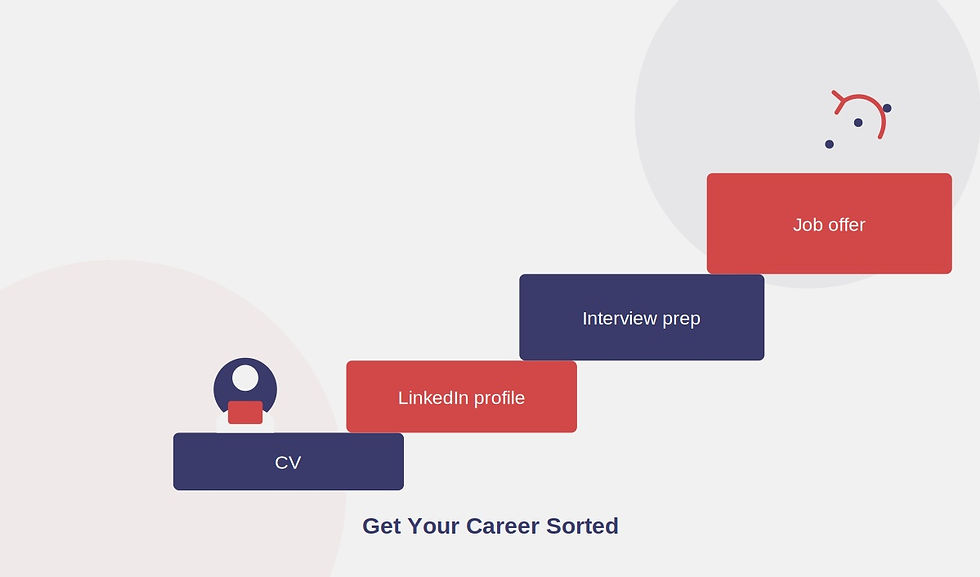
At Careersted, we support graduates and professionals with CV positioning, ATS optimisation, LinkedIn improvement, role targeting, application strategy, recruiter outreach and interview preparation. Where appropriate, we can also help candidates identify suitable opportunities and apply more strategically.
The aim is not simply to send more applications.
It is to make sure you are targeting the right opportunities with the right positioning.
Your Career Starts After Graduation
Graduating does not mean you are expected to have everything figured out immediately.
Your first objective should be much simpler:
Choose a direction, position yourself properly and build momentum.
Your first role may not define your entire career, but it can create the experience, network and skills that lead to the opportunities you ultimately want.
So if you have recently graduated, enjoy the achievement.
Then start building the next chapter.



Comments